
How I Freeze A Year of Corn
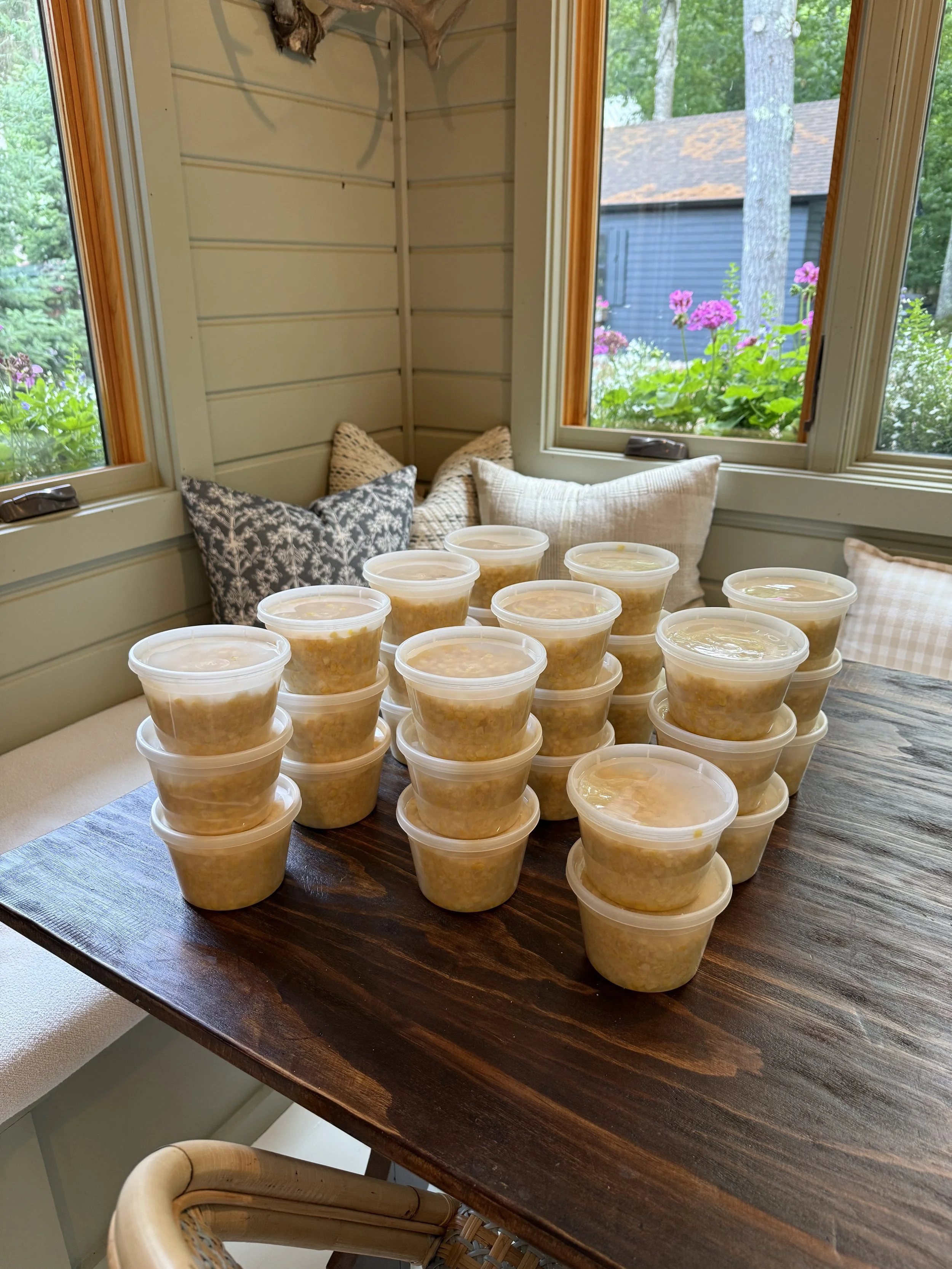
Every August, I drive three hours to buy corn.
Not because there’s no corn closer — there’s a farm stand practically everywhere in Wisconsin in the summer. The best corn I’ve found anywhere comes from Soda’s Farm Market in Princeton, WI, and once you’ve had it, I think you would agree. This year I bought eight dozen ears and drove them home.
There’s an old saying about sweet corn: you should have the water boiling before you go out to pick it. The idea is that the second corn is picked, the sugars start turning to starch, and every hour it sits, it loses a little of what makes it good. I can’t do anything about the three hours between the field and my kitchen, but I can make sure every ear gets processed the same day it was picked, and that’s the part that actually matters. By 5pm, all eight dozen were cut, blanched, and packed into the freezer.
It came out to 58 cups, in 29 containers. That’s most of a year of corn — corn for soup in January, for a quick Mexican side dish in February when I’m tired of root vegetables, for the middle of March that feels like it will never end. The amazing part is that it tastes like it was picked that morning.
This is one of those things that’s a little more work than buying a bag from the freezer section, and worth every minute. Many people have strong opinions on the “best” way to process corn. I am simply sharing what has worked for me. Note: I have learned so much from Krystal at Whole Fed Homestead on Instagram and YouTube. Much of this process is from her.
What you’ll need
Fresh sweet corn, as fresh as you can get it — same-day picked if at all possible
A large pot (or two) for blanching
A sharp knife and a big cutting board
Freezer containers or bags
How I do it
Start the same day. This is the whole game. If you can get corn that was picked this morning, buy more than you think you need. If it’s been sitting a few days, it’ll still be fine — just know the fresher it is, the better the result.
Husk everything first. Get all the ears husked and de-silked before you start, so once you’re in a rhythm you’re not stopping.
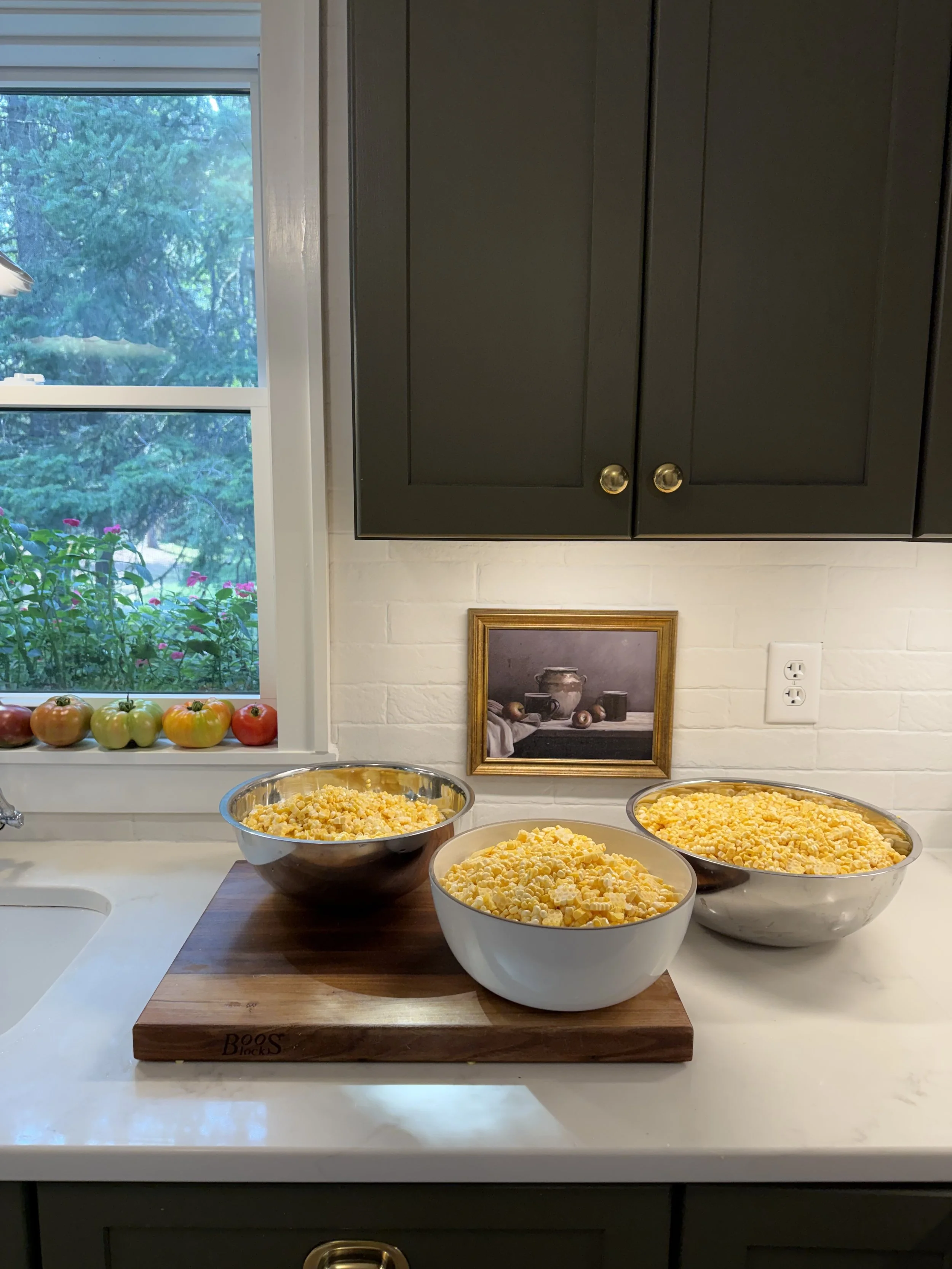
Cut the kernels off the cob raw. I cut first, then blanch — I find it faster and less messy than blanching whole ears and cutting them hot. Stand the ear in a wide bowl or on a rimmed board and run the knife down in long strokes. Don’t cut too deep; you want the kernel, not the tough part near the cob.
Steam blanch the kernels. A few minutes is all it takes — you’re stopping the enzymes that would otherwise break it down in the freezer. For every 6 cups of corn, I use 1/4 cup of water. Add the corn and water to the pot, cover, and cook on medium high heat for 8 minutes (10 minutes if you have a full pot), stirring every two minutes and replacing the cover thereafter. After that, cook for 3-5 minutes uncovered to evaporate some of the water. (I do 18 cups max in a dutch oven at one time. I have two dutch ovens, so I technically do 36 cups at a time.)
Cool it down fast. Spread the blanched corn out to stop the cooking — a sheet pan works great. There might be residual water in your pot. I try to strain that out so the corn isn’t sitting in excess water. You want it cooled before it goes in containers so it doesn’t steam itself in the freezer.
Pack. I pack mine in 16 oz (2-cup) rigid plastic containers — enough for a soup one night, enough for a side the next. Get as much air out as you can.
Freeze. That’s it. It keeps beautifully for a year, right up until next August when you do it all again, unless you run out by June like I usually do!
A few things people asked
How long does it last? A year, easily — I size it to use it all before the next season’s corn comes in, so nothing’s ever in there long enough to worry about.
Why containers instead of bags? Honestly, just preference — they stack neatly and I reuse them. Freezer bags work perfectly well and take up less room. Use what you have. I like these freezer containers.
Do you have to blanch? You can freeze it raw, and some people do. Blanching is what I’ve always been taught that keeps the taste and texture the freshest.
Why freeze in plastic? Personally, I don’t worry about freezing food in plastic, as long as hot food never touches it. So, I make sure the food is fully cool before I pack it away, and I never reheat it in that container. Also, I get a little worried about freezing in glass because there is a risk of it breaking. Please do what works best for you.